News you need, the perspective you won’t find anywhere else. The trans community’s guide to UK news, media and politics and our place in it.
The Trans Agenda
[16 March 2025]
Follow me on Bluesky – @HLeeHurley.substack.com
Just a quick note that there won’t be an edition next weekend as I’ll be away for a few days, relaxing in a bothy by the sea with little-to-no signal (hopefully).
Don’t worry, I’ll still clip the papers when I get back, so that means a bumper double edition the following week.
UK & IRELAND NEWS
GP condemns puberty blocker ban as trans children suffer dangerous consequences [Wales Online]
A Welsh GP has condemned the UK’s ban on puberty blockers, warning that trans children are resorting to dangerous methods like buying unregulated drugs or inducing anorexia to halt puberty.
She argues, correctly, that withholding blockers worsens mental health and forces trans youth into more invasive treatments later. The Compromised Cass Review cited weak evidence for puberty suppression because it ignored all relevant evidence, while this GP, who remained anonymous for reasons that should be obvious, insists the ban is failing a generation, leaving them vulnerable to distress and long-term harm.
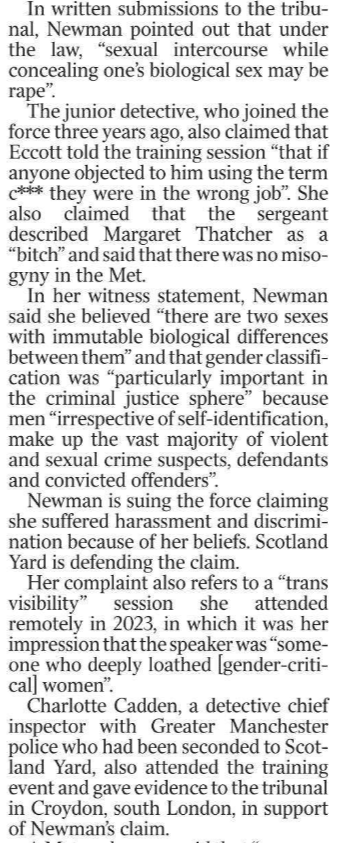
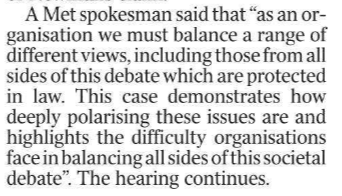
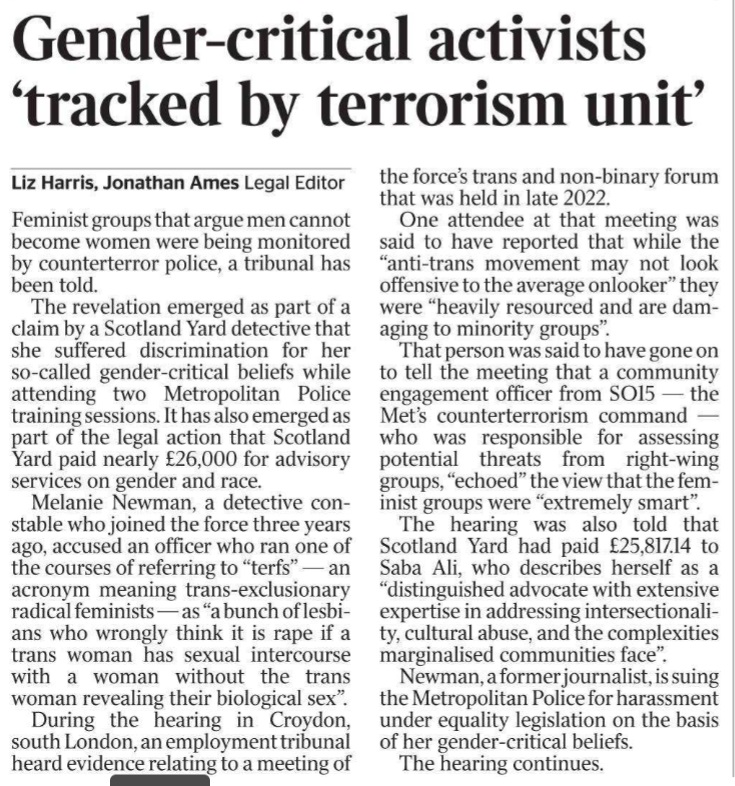
Gender critical activists ‘tracked by terrorism unit’
A tribunal has heard that Scotland Yard’s counterterrorism unit monitored anti-trans hate groups. Detective Constable Melanie Newman, who is suing the Met for harassment over her gender-critical beliefs, claimed an officer at a training session described “terfs” in derogatory terms. Evidence was also presented that a Met forum viewed anti-trans campaigners as “heavily resourced” and harmful to minorities, with a counterterror officer reportedly agreeing.
See PAPER REVIEW, Saturday, for the Times’ article on this.
‘What’s wrong with Cass?’ updated
AROUND THE WORLD
EU: Medical bodies slam lack of transparency in Cass Review [Ruth Pearce]
A coalition of 23 professional medical organisations and two patient representative groups from Germany, Austria, and Switzerland has raised concerns over the Cass Review’s lack of documented medical expertise in its recommendations on gender dysphoria treatment in children and adolescents.
The German Society for Child and Adolescent Psychiatry, Psychosomatics and Psychotherapy has highlighted that no identifiable medical societies were involved in the report’s preparation. The role of an “Assurance Group” was acknowledged, but it was explicitly excluded from shaping recommendations. Additionally, reports suggest an “Advisory Board” was formed, yet its composition and contributions remain undocumented.
“It is not documented which other people, apart from the author, were involved in the preparation of the review and in what way,” they state. “Medical societies were not identifiably involved in the preparation of the report.”
EU: EU Court rules gender marker corrections cannot require proof of surgery [Court of Justice of the European Union]
The Court of Justice of the European Union (CJEU) has ruled that trans people cannot be required to provide proof of gender reassignment surgery to have their gender identity legally recognised in public records. The case was brought by VP, an Iranian refugee in Hungary, who was granted asylum in 2014 based on their transgender identity but was incorrectly registered as female in the Hungarian asylum database. Despite presenting medical certificates from psychiatric and gynaecological specialists confirming their gender identity as male, Hungarian authorities refused to amend the record because VP had not undergone surgical transition.
The CJEU ruled that this practice violates the GDPR, which guarantees individuals the right to correct inaccurate personal data. The court emphasised that the accuracy of gender data should reflect a person’s lived identity, not their assigned sex at birth. Furthermore, it clarified that EU law supersedes national laws that fail to provide legal recognition procedures for transgender people.
USA: LAPD officer shoots and kills ‘kidnapped’ trans woman after she calls 911 for help
USA: West Virginia Republicans pass horrifying bill allowing child genital exams without parental consent [LGBTQ Nation]
West Virginia Republicans have passed S.B. 456, allowing health care providers to examine a child’s genitals without parental consent to determine “biological sex.” An earlier version would have allowed teachers to perform these exams. Democrats condemned the bill as an egregious invasion of privacy, but it passed both chambers and now awaits Gov. Patrick Morrisey’s signature.
USA: HHS to propose nationwide ban on insurance coverage for gender-affirming care
USA: Navy orders trans troops to leave or face forced removal [Pink News]
The US Navy has ordered trans service members to voluntarily leave by March 28 or face forced removal under new policy guidance. The directive, signed by Navy Secretary Terence Emmert, stated that the military recognises only male and female sexes and that they deny biology to deem sex “immutable.”
MEDIA
US trans journalists report by-lines being retroactively changed [Jael Holzman]
SPORT
ICO to elect new President this week
There are three main candidates, all of whom have made targeting trans people a key part of their pitch to be elected. There have been reports that the outgoing president, who has stood firm in his refusal to ban trans women, has been pushing people to vote for Kirsty Coventry, the only woman in the running.
Until recently, she was not anti-trans. She is now.
Lord Seb Coe is seen as the favourite. He has already banned trans women as the head of World Athletics. The second favourite is Juan Antonio Samaranch, who this month assured people he would target trans people if elected, such is the world we live in.
With the Olympics set to take place in LA in 2028, I full expect a ban on trans women – which goes against the Olympian Charter – to be in place.
Trump administration targets Maine with sweeping federal investigations over transgender sports policy [Pro Publica]
The Trump administration has launched multiple federal investigations into Maine’s policies on transgender student athletes, following the president’s public clash with Governor Janet Mills over a high school pole vaulting event won by a trans girl. Six federal agencies, including the Departments of Education, Health and Human Services, and Justice, are now targeting the state, with the USDA even halting university research funding, all because of one trans child.
ANY OTHER BUSINESS
NHS strikes £85,000 deal with Elon Musk’s Starlink as part of a wider programme [Telegraph, 10/3/25]

Burkes being berks [News Letter]
Members of the bigoted Irish evangelical Burke family caused a disruption at a high-profile gala dinner in Washington, DC, attended by Irish premier Micheál Martin. Three family members interrupted a speech by NFL coach Dan Quinn at the Ireland Funds dinner, shouting loudly before being forcibly removed by security and law enforcement.
The Burkes have been involved in high-profile legal disputes in Ireland, particularly around Enoch Burke’s suspension as a teacher for allegedly harassing a trans student who wasn’t even in his class. Burke was later jailed for contempt of court after continuing to show up at his former school despite a restraining order. When finally released from prison, he went back to standing outside the school again. The last I read he owed around €250,000 in fines, if I remember correctly.
THE WEEK AHEAD
Full parliament business can be viewed here.
Monday 17 March
St Patrick’s Day
British Sign Language Week begins, 17 March – 24 March
New Ofcom rules on online safety come into force
Investigatory Powers Tribunal (IPT) hears case brought by Northern Irish journalists alleging covert surveillance by PSNI
Tommy Robinson in court on terrorism charges
Tuesday 18 March
Neurodiversity Celebration Week begins, 18 March – 24 March
Wednesday 19 March
Women’s and Equalities, oral questions, House of Commons, 11.30am, including “What steps she is taking to help end discrimination against LGBT+ people?”
Prime Minister’s Questions, House of Commons, 12pm
Matt Hancock at Covid-19 inquiry hearing to be questioned on procurement
Report: WMO State of the Global Climate
Thursday 20 March
Impact of the USA’s withdrawal from the World Health Organization on the global treatment of HIV/AIDS, oral questions, House of Lords, 11am+
75th anniversary of the European Convention on Human Rights, debate, House of Lords, 11am+
Spring Equinox
IOC elects new President for the Olympics. All three leading candidates have pledged to ban trans women.
Report: World Happiness
Friday 21 March
World Down Syndrome Day
World Poetry Day
Plaid Cymru spring conference
11 years ago: Crimea formally annexed
Saturday 22 March
Lib Dems spring conference begins
Sunday 23 March
5th anniversary of first UK Covid lockdown
SHORTS
Peers who sat in the House of Lords during the last parliament have given a combined £109m in political donations, almost £50m of which was contributed before they secured their seats. [Guardian US]
The United States has been added to the Civicus Monitor Watchlist, which identifies countries that the global civil rights watchdog believes are currently experiencing a rapid decline in civic freedoms. [Guardian US]
THE PAPERS
It was another somewhat quiet week again with almost the same number of articles printed about trans people as last week (14 v 13).
Of those, the Telegraph alone printed nine, while the Times had four and the Guardian/Observer had none.
The other article was found in the Mail, whose anti-trans output has halved almost every week since the start of February when they were doing eight or nine a week. I have nothing to offer to explain that drop, but I very much doubt it is because they have caught themselves on.
With the IOC selecting their next president on Thursday, and the winner guaranteed to be anti-trans, along with the imminent For Women Scotland ruling, I do not expect next week to be quiet.
11 of the 14 articles were written fully, or in part, by cis men.
They all continue to ignore what Donald Trump’s administration is doing to trans people in the US.
Quoted, mentioned or featured this week: Anna Melamed (x3), Fiona McAnena, Helen Joyce, JK Rowling, Keira Bell, Kellie-Jay Keen, Let Women Speak, Maya Forstater, Melanie Newman (x3), Paul Conrathe, Rose Cross, Sandie Peggie, Sascha Bailey, Sex Matters (x3), Stephanie Davies-Arai, Transgender Trend
Whose bylines were on all these articles? Jonathan Ames (x3), Martin Evans, Daniel Sanderson, Michael Deacon (x3), Fiona Parker, Julia Llewellyn Smith, Sam Merrriman, Liz Harris, Mark Ludlow, Ben Spencer
Spotted or know something you think I should include in the Trans Agenda?
THE PAPERS Monday 10 March – Sunday 16 March
Monday Total: 2
The Guardian [0]
The Times [0]
Daily Mail [0]
Telegraph [2]
![Group that said ‘no woman has a penis’ kicked out on women’s day Gender-critical pressure group felt ‘harassed and upset’ after council worker demanded they leave event The Daily Telegraph10 Mar 2025By Martin Evans Crime editor Members of Let Women Speak were asked to leave the event in Darlington at the weekend A COUNCIL worker attempted to evict a group from an International Women’s Day event after they distributed leaflets declaring “no woman has a penis”. The incident occurred on Saturday in Darlington as women gathered at a council-run venue to celebrate the fight for female equality and liberation. Representatives from the gender-critical pressure group, Let Women Speak, attended the function but were told they were not welcome and were even warned the police would be called if they did not leave. The leaflets stated that women do not have penises and men do not have vaginas, and claimed transitioning children is “profound child abuse”. Let Women Speak was just one of a number of groups that had gathered at the venue, Number Forty Skinnergate, which is described as a “safe space for everyone on a night out in Darlington town centre”. But the delegates from the group, which describes itself as a “global women’s rights movement”, were told that they were not welcome at the event because the leaflets breached the Public Sector Equality Duty (PSED). A video posted on social media shows a dispute between two members of the group and Andrew Allison, the former Darlington borough council community resilience officer who now runs the venue. In the exchange, he is heard telling the women: “This building is a safe space for all on Friday and Saturday nights, [the] Public Sector Equality Duty, requires us to foster good relations between all groups and this isn’t doing that I’m afraid, so I am going to have to ask you to leave.” One of the delegates countered that the slogans on the leaflet were “statements of fact” or “objective reality”. But Mr Allison said while he was not disputing anything on the leaflet, his role was to ensure the PSED was applied. He said while the venue was advertised as a “safe space”, it was not for those who voiced “those opinions”. The PSED is a law that requires public bodies to promote equality and reduce discrimination. Asked about freedom of speech, Mr Allison replied: “Freedom of speech is fine but as far as Darlington borough council is concerned freedom of speech doesn’t mean thoughtless speech and we have a duty under the Equality Act and unfortunately are going to have to ask you to leave because that doesn’t comply with what we do.” Despite being warned that the police would be called if they did not leave, the Let Women Speak delegates refused and stayed until the event finished at around 3pm. Rose Cross, the North East coordinator for Let Women Speak said the exchange had left members feeling upset and harassed. She told The Telegraph: “There were a number of organisations there representing women’s rights, including sexbased rights and protecting women’s spaces and prisons. The event was open to the public and everyone was welcome to discuss their views. “Mr Allison stormed in, it felt very aggressive. He demanded to speak to the organiser and he talked about protecting safe spaces, but where was our free speech and our safe space? “We felt very harassed, upset and Darlington council are failing women and free speech. We felt discriminated against for being women and for holding perfectly legal views.” Kellie-jay Keen, the founder of Let Women Speak, said it showed how local authorities had been “coerced and manipulated to accept the activist version of rights”. Darlington borough council has been contacted for comment. Article Name:Group that said ‘no woman has a penis’ kicked out on women’s day Publication:The Daily Telegraph Author:By Martin Evans Crime editor Start Page:9 End Page:9](https://substack-post-media.s3.amazonaws.com/public/images/a860682e-2c3b-4f01-b73f-438311297c39_754x715.png)
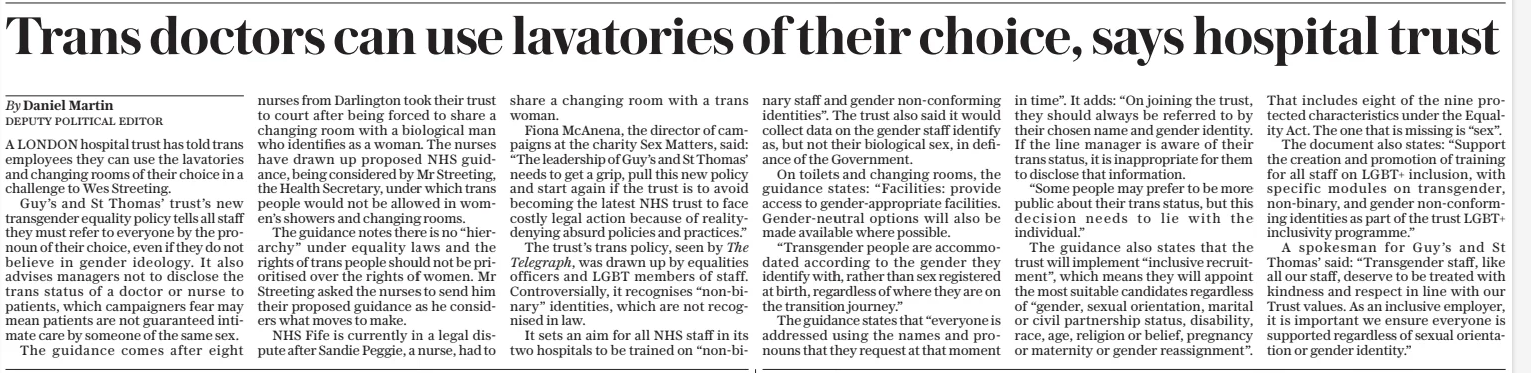
Tuesday Total: 2
The Guardian [0]
The Times [1]
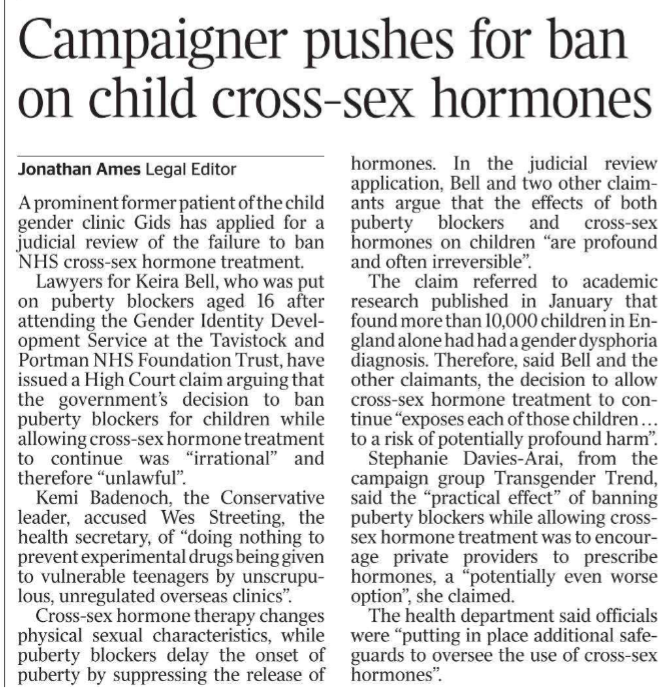
Daily Mail [0]
Telegraph [1]
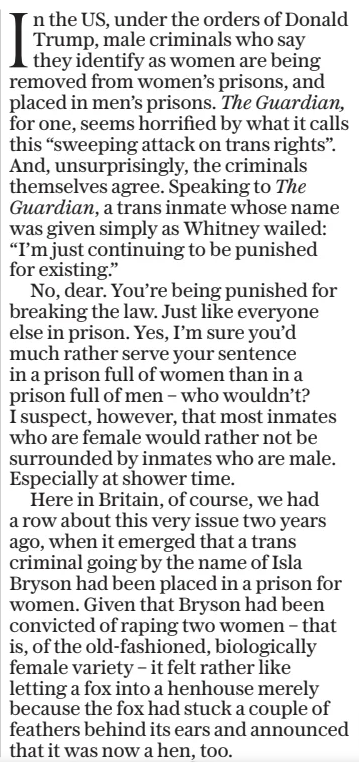
Wednesday Total: 2
The Guardian [0]
The Times [0]
Daily Mail [0]
Telegraph [2]
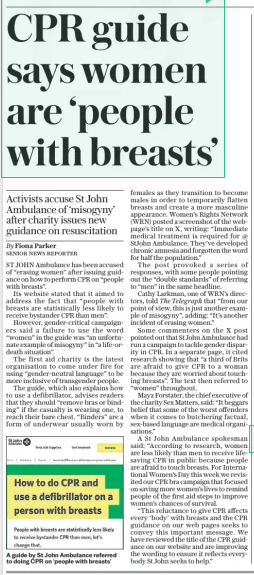
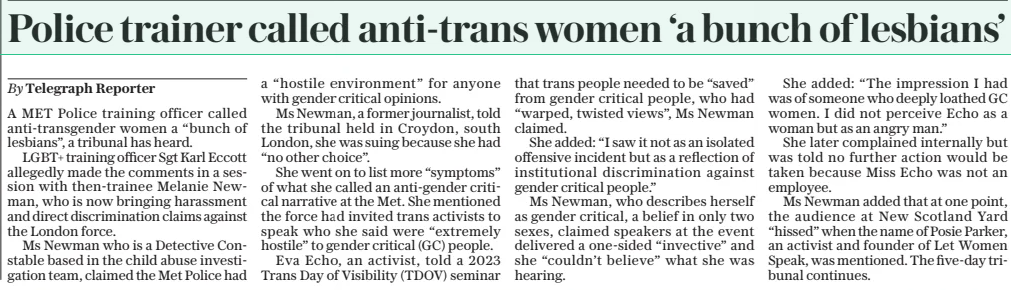
Thursday Total: 2
The Guardian [0]
The Times [1]
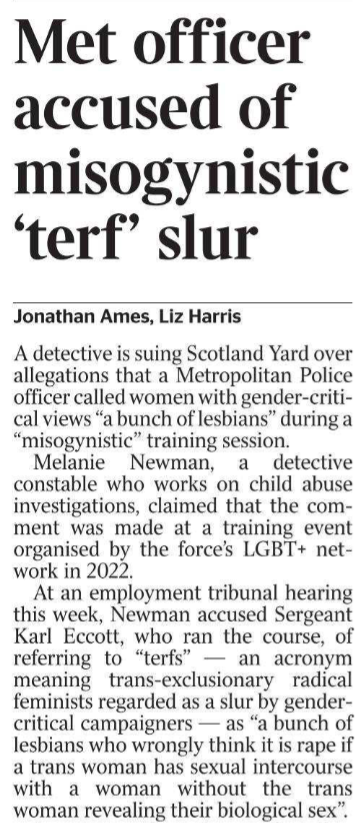
Daily Mail [0]
Telegraph [1]
Friday Total: 4
Saturday Total: 0
The Guardian [0]
The Times [1]
Daily Mail [1]
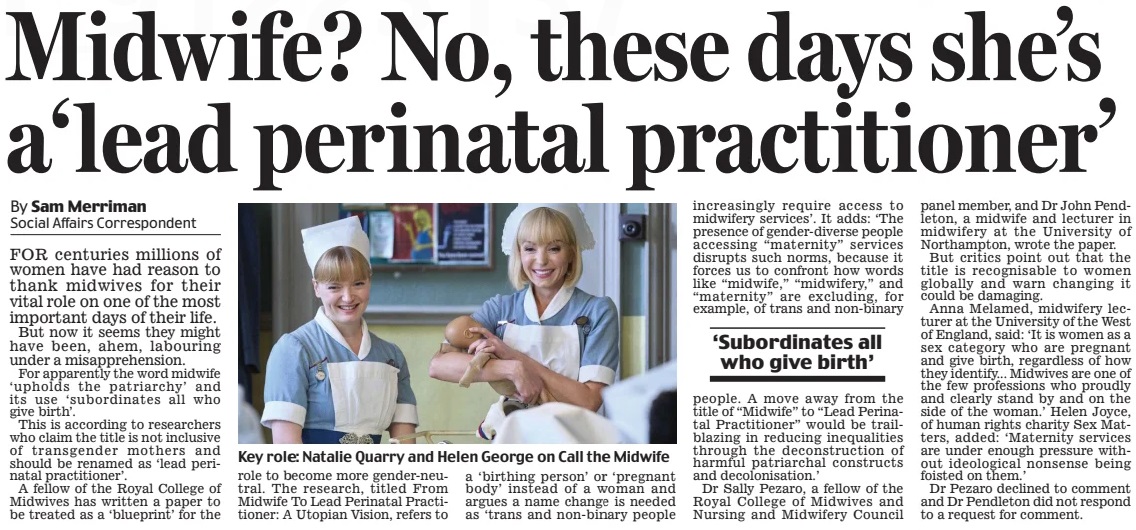
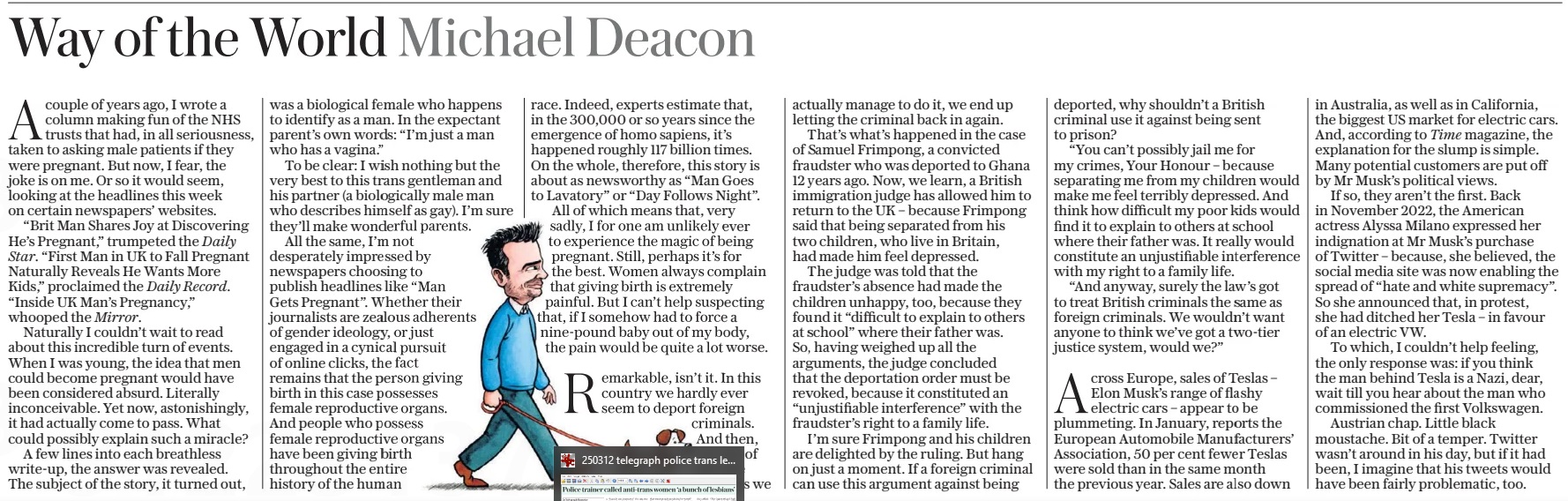
Telegraph [2]
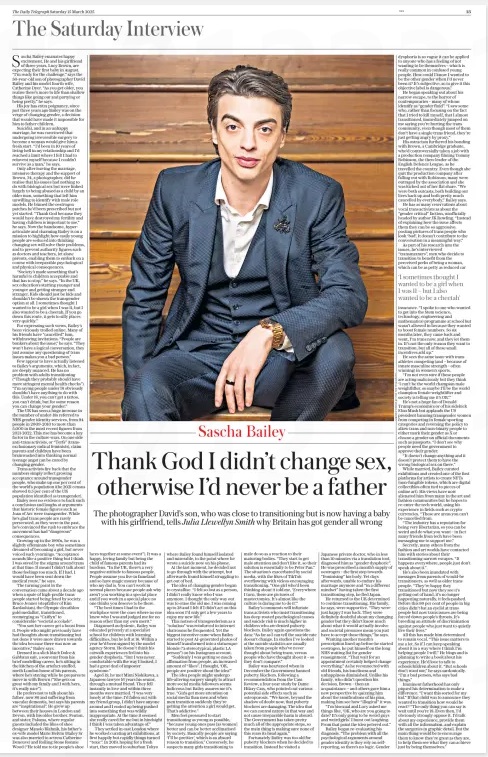
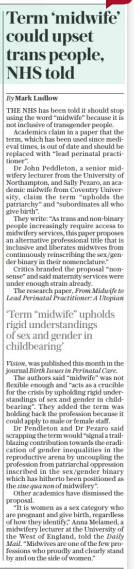
Sunday Total: 2
The Observer [0]
The Sunday Times [1]
![Reopening the case against puberty blockers Children with gender dysphoria will be treated with the banned drugs if a new trial wins ethical approval. What is the science behind them, asks Ben Spencer Opponents of the ban on puberty blockers protest in London last year. Next image › The launch of a clinical trial is usually met with a reaction somewhere between polite indifference and deafening silence. The new Pathways study, however, is not that kind of trial. Last month, NHSfunded scientists announced they were seeking ethical approval to test banned puberty blockers on children with gender incongruence. If regulators give consent — a decision expected in coming weeks — the £10.7 million trial will start by the end of the year. The backlash has been immediate. On one side, some campaigners argue that trialling such risky drugs is unethical, tantamount to treating children as guinea pigs and little more than a loophole for the continued use of outlawed treatments. On the other side, equally vocal campaigners argue that the ban — introduced last May by the Conservative health secretary Victoria Atkins and made indefinite in December by her Labour successor, Wes Streeting — unfairly denies puberty blockers to children struggling with their identity, and risks a surge in suicides among young trans people. Research is all very well, they argue, but not at the cost of routine access to what they claim are safe and proven drugs. Between the two sides, struggling to be heard above the din, are doctors who point out that puberty blockers were banned for routine use precisely because further research is needed. A trial, they argue, is how we find out more. Baroness Cass is the paediatrician whose highly critical review into gender identity services led to the withdrawal of the routine use of blockers and the closure of Gender Identity Development Service (Gids) at the Tavistock Centre in north London. Her 388-page report, published last April, was seen as a vindication for those who felt that the use of puberty blockers was leading to potentially catastrophic outcomes for children. But Cass’s review also recommended a trial, and she is sticking to her guns. She says it is the gulf between the two sides of the debate, together with the dearth of robust evidence about the benefits and harms of the drugs, which makes a trial essential. “In the absence of this evidence, people draw their own conclusions,” Cass says, in her first public comments since the trial was announced. “There are very strongly held but polarised views on the use of these medications, with some people thinking they should be stopped entirely for young people with gender dysphoria, and others arguing they should be much more freely available. Both these positions have some cogent arguments, but the two positions are incompatible. From a clinical research perspective, this is called equipoise. We do need further research to fill some of the evidence gaps, to remove uncertainty for the young people, their families and clinicians.” The atmosphere around this issue is so febrile that the government has already had to see off a judicial review against the puberty blockers ban, brought last year by the campaign group TransActual UK and the Good Law Project, led by the activist lawyer Jolyon Maugham. Now it is being threatened with another. Lawyers for a group campaigning on the other side of the argument, led by a “detransitioned” patient, Keira Bell, and a psychotherapist, James Esses, have threatened a judicial review against the Health Research Authority if it gives ethical approval for the Pathways trial. Puberty blockers are a class of drugs called gonadotropin-releasing hormone (GnRH) analogues, which suppress the release of sex hormones such as testosterone and oestrogen. Similar drugs are used to lower hormone levels in breast cancer and prostate cancer patients, and for those with heavy periods or endometriosis. Among boys, they limit the growth of facial and body hair, prevent voice deepening and limit the growth of genitalia. In girls, treatment limits or stops breast development and stops menstruation. At first they were used to temporarily stop puberty in children who started too early, usually before the age of eight, but began to be used for gender dysphoria in the UK in 2011, based on the “Dutch protocol” developed by Peggy Cohen- Kettenis, a psychologist from Utrecht. According to this protocol, blockers were useful for two key reasons. First, they provided a “pause” to the changes that come with puberty, allowing children identifying as transgender “time to think” before making a decision about their future. Second, they were thought to improve the ability of those born as one sex to “pass” as the other sex in later life. The Cass review found this was “particularly important” for boys who become transgender women, “who were able to access puberty blockers before developing facial hair and dropping their voice”. But it also found little evidence these drugs worked to reduce the psychological distress of gender dysphoria. The Tavistock’s initial study, on 44 children given puberty blockers between 2011 and 2014, found no statistically significant improvement in psychological wellbeing. Indeed, some children saw an increase in suffering. An independent review also found there was no evidence of a rise in suicides since puberty-blocking drugs were restricted at the Tavistock. Instead of reporting these negative findings, the study was buried by clinical staff until 2020. Meanwhile, use of the drugs had become routine, as increasing numbers of children were referred to the service. As many as 2,000 children are thought to have been given blockers — as Anna Hutchinson, a senior clinical psychologist at Gids, told the journalist Hannah Barnes: “There were no referral criteria. We were accepting everyone.” The fundamental problem, according to Sir Jonathan Montgomery, professor of healthcare law at University College London and former chairman of the Health Research Authority, is that “these treatments had moved from use in a research context to business-as-usual usage at the Tavistock without proper evaluation of the research data”. But rather than recommending an outright ban, Cass became persuaded during her investigation that a small group might benefit from puberty blockers. A re-analysis of the early Tavistock data found that 9 to 29 per cent of those given the drugs saw a reliable improvement in distress levels, 15 to 34 per cent saw a deterioration and 37 to 70 per cent saw no change. Determining whether some children might benefit, and identifying which fell into that category, was Cass’s main argument for carrying out a trial. Without this certainty, some families with children convinced of their gender dysphoria would continue to seek out the drugs from overseas or on the black market. The researchers at King’s College London, who will lead the trial among patients at new NHS gender dysphoria services in London, Bristol and Liverpool, and possibly another three centres, have decided not to release the study design before it has received final ethical approval. They are also not responding to inquiries. The question at the heart of this debate is whether it is possible for doctors, amid all the politicisation and pressure provoked by this issue, with all the baggage of social media contagion, image problems, overdiagnosis and culture warfare that comes with it, to reliably distinguish between the minority of children who might benefit from blockers and those for whom they could do lasting harm. Dr Hannah Ryan, a specialist registrar in clinical pharmacology at Royal Liverpool University Hospital, is sceptical that it would even be possible to design a good study on the question. “We have no way of predicting which children will persist with gender dysphoria into adulthood and who will simply desist,” says Ryan, a member of the Clinical Advisory Network on Sex and Gender, an increasingly influential group of doctors campaigning against the trial. “Historically, around three quarters will desist without any intervention at all. You could not design inclusion criteria for a trial that would exclude those kids who will just simply grow out of this and not become transgender adults.” Before carrying out a trial, Ryan argues, the NHS should track down the 2,000 or so children treated with puberty blockers at the Tavistock and assess the effects upon them. Cass called for a review of Gids patients but it has proved hard to access medical records. “Before taking risks with children’s health and wellbeing, we are obliged to look at that data,” Ryan says. Sallie Baxendale, professor of clinical neuropsychology at University College London, agrees. Although pausing puberty is temporary, there may be lasting effects. “We currently don’t know what the long-term effects of [interrupting puberty] will be, or whether the brain ever catches up on that period of suspended development,” she says. “A clinical trial looking at the impacts in the short term won’t give us these answers.” 2,000 Number of children treated with blockers at Gids 70% Upper proportion of those on blockers whose distress levels didn’t improve](https://substack-post-media.s3.amazonaws.com/public/images/84809bb0-9434-471b-9a53-fb9aece488ac_533x868.jpeg)
Mail on Sunday [0]
Sunday Telegraph [1]
TRANSWRITES YOU MIGHT HAVE MISSED
Judge Tinnion should be ashamed of allowing tribunal to become a circus of harassment, by Gemma Stone
Calls for boycott as Oxford Literary Festival continually promotes bigotry, by Gemma Stone
My doctor emailed me back, by Abigail Thorn
The Rainbow Laces campaign isn’t enough, by Arthur Webber
How Erika Hilton – a Black travesti trans woman – is changing Brasil, by Lis Welch
When was the T added to LGBT? A quick history, by Sarah Clarke
Trans people are the greatest assault on women in JK Rowling’s life time, apparently, by Gemma Stone
NHS & puberty blockers: Former GIDS patients reflect on long wait times, invasive assessments, by Sasha Baker.
SUPPORT THE TRANS AGENDA
Tired of the same old news narratives? Get ‘The Trans Agenda’ delivered right to your inbox – news with the trans community at the forefront. Subscribe now!
The Trans Agenda also needs your help. Your donation powers my reporting efforts, amplifying trans voices and keeps you in the know. Support independent trans journalism. Help keep in-depth reporting in ‘The Trans Agenda’ available and accessible by donating today!
CALL FOR STORIES
Seen something newsworthy related to the trans community in the UK? Send me a tip! I’m always looking for leads and underreported stories.